

Now Reading: Simple Daily Habits That Improve Mental Health
-
01
Simple Daily Habits That Improve Mental Health

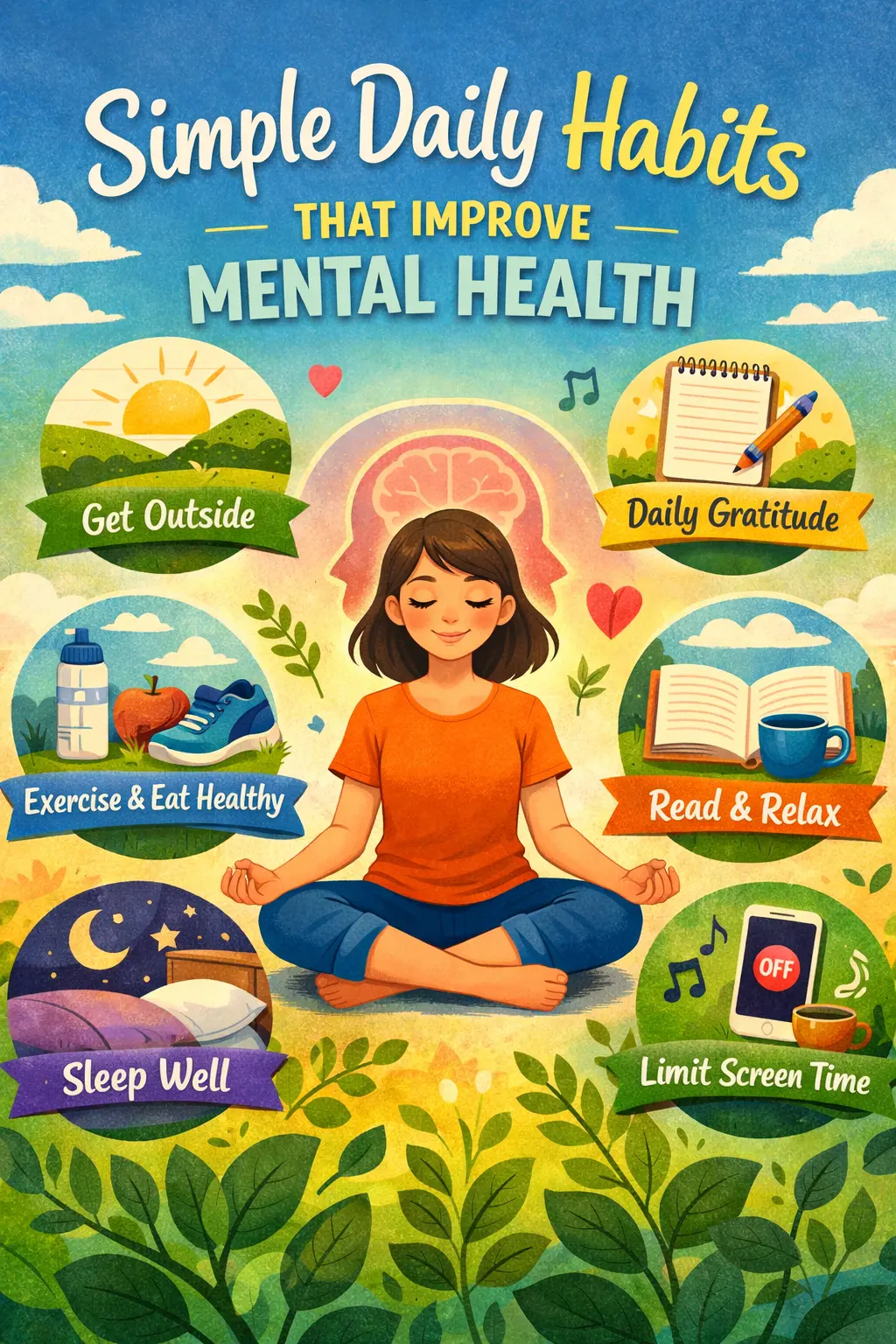
Simple daily habits will not erase every challenge, but they can quietly shift your mood, energy, and resilience in ways you actually feel. The key is not perfection; it is choosing a few small actions you can realistically repeat, even on tough days.
Why Small Daily Habits Matter
Routines give your brain a sense of safety and predictability, which helps lower stress and make emotions easier to manage. Research links consistent healthy habits like sleep, movement, and social connection to lower risks of depression and anxiety over time.
Instead of trying to “fix” everything at once, think of habits as small anchors that keep you steady when life gets noisy. Even 5–15 minutes a day can be enough to start feeling a difference in your mental state.
Habit 1: Protect Your Sleep
Sleep is one of the strongest foundations for good mental health. Poor or irregular sleep can worsen anxiety, mood swings, and concentration, while better sleep supports emotional resilience and clearer thinking.
Simple daily steps:
Set a “wind-down alarm”: Pick a time 30–60 minutes before bed to dim lights, put your phone away, and switch to calming activities.
Create a tech-light bedroom: Avoid scrolling in bed and keep notifications off at night if you can.
Keep wake and sleep times similar: Even on weekends, a relatively steady schedule helps your body regulate mood and energy.
Habit 2: Move Your Body (Gently Counts)
Regular movement is strongly linked to reduced anxiety, depression, and stress. You don’t need intense workouts; even short “exercise snacks” like brief walks or climbing stairs can boost mood and focus.
Realistic ideas:
10-minute walk: After lunch or dinner, walk around your home or outside, no step goal needed.
Movement while waiting: Do light stretches or a few squats while coffee brews or during TV ads.
Make it pleasant: Put on a favourite song and move however feels good—no rules, just gentle motion.
Habit 3: Do A “Gratitude Walk”
Combining movement with gratitude can calm the nervous system and shift your focus away from constant worry. A gratitude walk is simply walking while noticing and appreciating small, good things around or within you.
How to try it:
Walk for 5–15 minutes and silently name things you’re thankful for: a tree, your breath, your shoes, a kind message you received.
If gratitude feels hard, look for what is “just okay” or neutral (like a gentle breeze or a comfortable chair) rather than forcing big positives.
Repeat once a day or a few times a week as a moving reset button for your mind.
Habit 4: Check In With Yourself Daily
Taking a brief pause to notice how you feel can stop emotions from building up unnoticed. Self-check-ins build emotional awareness and make it easier to ask for what you need—rest, support, or a change of pace.
A 3-question check-in (2–5 minutes):
- What am I feeling right now (even if it’s “numb” or “nothing”)?
- What might be causing this feeling?
- What is one small thing that could help me in the next hour? (drink water, step outside, text a friend).
You can do this in a journal, in your phone notes, or just in your head while you sit or walk.
Habit 5: Nurture Tiny Moments Of Connection
Human connection is a powerful protector against depression and anxiety. Even short, simple interactions—smiles, check-ins, quick messages—can help you feel less alone and more supported.
Daily connection ideas:
- Send one “thinking of you” text, voice note, or meme to someone you care about.
- Say a genuine hello to a neighbour, coworker, or shop staff when you see them.
- If you have a little more energy, schedule a short phone or video call once a week rather than waiting to feel “ready.”
Habit 6: Make Food A Form Of Care
What you eat can affect mood, focus, and energy throughout the day. Diets that include fruits, vegetables, whole grains, and healthy fats are linked to better mental health and lower depression risk.
Simple, realistic changes:
- Add, don’t perfect: Add one fruit or vegetable to a meal instead of trying to overhaul everything.
- Drink more water: Keeping a bottle nearby and sipping regularly helps with clarity and overall wellbeing.
- Notice caffeine and sugar: If you feel more anxious, experiment with cutting these a little earlier in the day.
Habit 7: Schedule 10–15 Minutes Of Calm
Mindfulness, relaxation, and breathing exercises help lower stress and improve emotional regulation. Even short daily practices can reduce irritability, anger, and fatigue and increase focus.
Ways to build calm into your day:
- 10-minute breathing break: Inhale slowly for a count of four, exhale for a count of six, and repeat.
- Short guided meditation: Use a meditation app or a free audio for 5–10 minutes in the morning or before bed.
- Quiet time ritual: Sit with tea, no screens, and just notice your thoughts passing without judging them.
Habit 8: Limit Digital Noise
Constant notifications and doom-scrolling can increase stress, comparison, and mental fatigue. Taking intentional breaks from screens supports better mood, sleep, and focus.
Practical digital boundaries:
- Create “no phone” zones: For example, no phone at the dining table or in bed.
- Set screen-time limits for the apps you lose time in most.
- Replace 10 minutes of scrolling with a calming alternative—stretching, reading a page of a book, or stepping outside.
Habit 9: Keep A Simple “Wins & Gratitude” Note
Gratitude practices have been linked to better sleep, improved mood, and reduced anxiety. Writing down positives also trains the brain to notice small good moments, not just problems.
A 3-minute night routine:
- Write 1–3 things you’re grateful for (they can be small, like a hot shower or a message from a friend).
- Add one “tiny win” for the day, even if it’s just “I got out of bed” or “I went for a short walk.”
- Keep this note in the same place so it becomes a familiar, comforting ritual.
Habit 10: Build A Gentle Daily Structure
Having some structure in your day—even a loose one—reduces decision fatigue and uncertainty, which can worsen stress and low mood. Routines help you feel more in control, even when life is unpredictable.
A simple structure might include:
- A morning anchor: one small thing you do every morning (stretching, journaling, or a calm breakfast).
- A midday reset: a walk, breathing break, or check-in with yourself.
- An evening wind-down: screens off, light reading, journaling, or music before bed.
You don’t need to schedule every minute; just a few repeated points in the day can create a sense of rhythm and safety.
Making Habits Stick (Without Overwhelming Yourself)
Trying too many changes at once often leads to giving up. Habits are more likely to last when they are small, specific, and attached to something you already do.
Helpful ways to start:
- Choose one habit: Pick the one that feels easiest or most appealing right now.
- Attach it to an existing routine: For example, “After brushing my teeth at night, I’ll write one thing I’m grateful for.”
- Make it “too small to fail”: Aim for 3–10 minutes instead of 30; you can always do more if you feel like it.
If you miss a day, that is completely normal. Focus on restarting gently rather than judging yourself; every new day is another chance to practice these supportive habits.
If your mental health feels very heavy or overwhelming, these habits are not a replacement for professional help—but they can be a kind, steady foundation alongside therapy, medication, or other support. Even one small daily action that cares for your mind is a powerful statement: your wellbeing matters, and you are worth the effort