

Now Reading: Is Orkut Coming Back? The Iconic Social Network Might Be Making a Comeback
-
01
Is Orkut Coming Back? The Iconic Social Network Might Be Making a Comeback

In the early days of social media, long before Facebook and Instagram dominated our screens, there was Orkut — the friendly, pastel-colored network that helped millions of people connect online for the very first time. For many in India, Brazil, and beyond, Orkut wasn’t just a website; it was a community. And now, after more than a decade of silence, it looks like something new might be on the horizon.
The Rise of Orkut: A Social Media Pioneer
Launched in 2004 by Orkut Büyükkökten, a Turkish engineer at Google, Orkut was one of the first platforms to truly bring people together online. It offered features that were years ahead of their time — personal testimonials, “scraps” (messages), photo sharing, and interest-based communities.
At its peak, Orkut had more than 300 million users, with the largest audiences coming from India and Brazil. It was the go-to platform for sharing thoughts, reconnecting with friends, and even finding love. For many, their first digital friendship — or heartbreak — happened on Orkut.
The Fall: Why Did Orkut Shut Down?
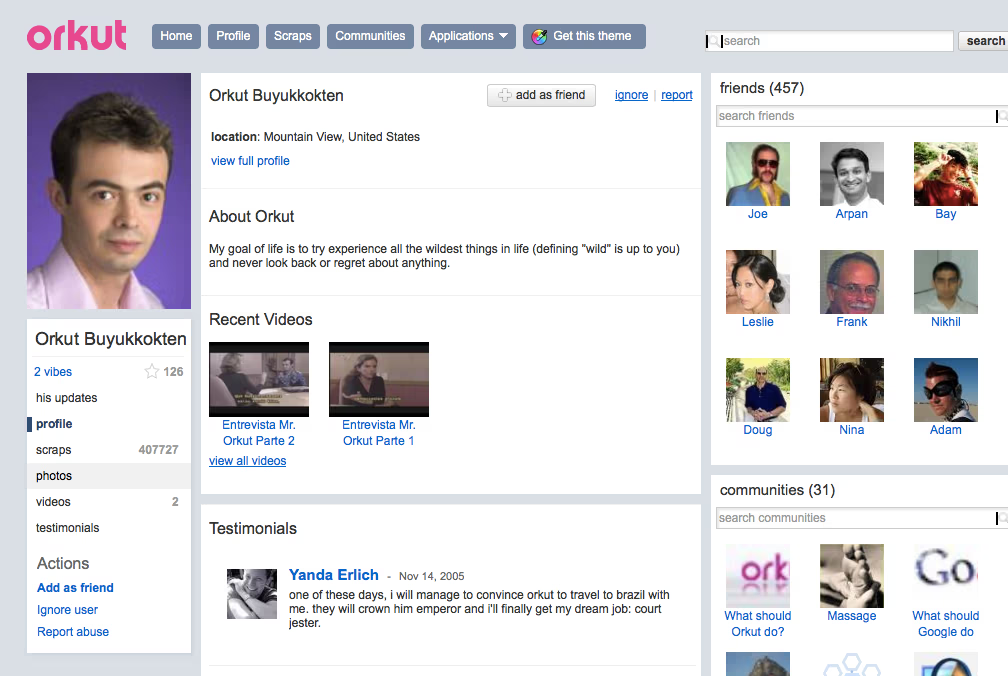
Despite its immense popularity, Orkut couldn’t keep up with the fast-changing world of social media. Platforms like Facebook and Twitter began offering cleaner designs, stronger privacy options, and new ways to interact. Orkut, tied closely to Google’s experimental projects, failed to evolve as quickly.
In 2014, Google officially shut down Orkut. Millions of users were heartbroken, losing not just a social profile but a digital scrapbook of their early internet lives. The shutdown marked the end of one of the most nostalgic eras in online history.
The Comeback: Orkut’s Founder Hints at Something New
Today, a surprising message has appeared on the official orkut.com website:
“And it’s why I am building something new. See you soon!”
This note, signed by Orkut’s founder, has sparked global curiosity and excitement. Could Orkut be making a comeback in 2025?
Büyükkökten has long been vocal about building a kinder, more human social network — one that focuses on connection, not competition. In 2016, he launched Hello, a social app that aimed to revive the community-driven spirit of Orkut. While Hello didn’t achieve mainstream success, it showed that his vision for better online spaces is far from over.
Why Orkut Still Matters in 2025
Even in the age of Instagram and TikTok, the nostalgia for Orkut runs deep. It reminds people of a simpler internet — one built on genuine friendships and shared interests, not ads and algorithms.
If Orkut’s founder truly is creating a new platform, it could represent a refreshing alternative to today’s fast-paced, attention-driven networks. A new Orkut in 2025 might just bring back what the internet has lost: kindness, curiosity, and connection.
Stay Informed With the Latest & Most Important News
Previous Post
Next Post








Advertisement